
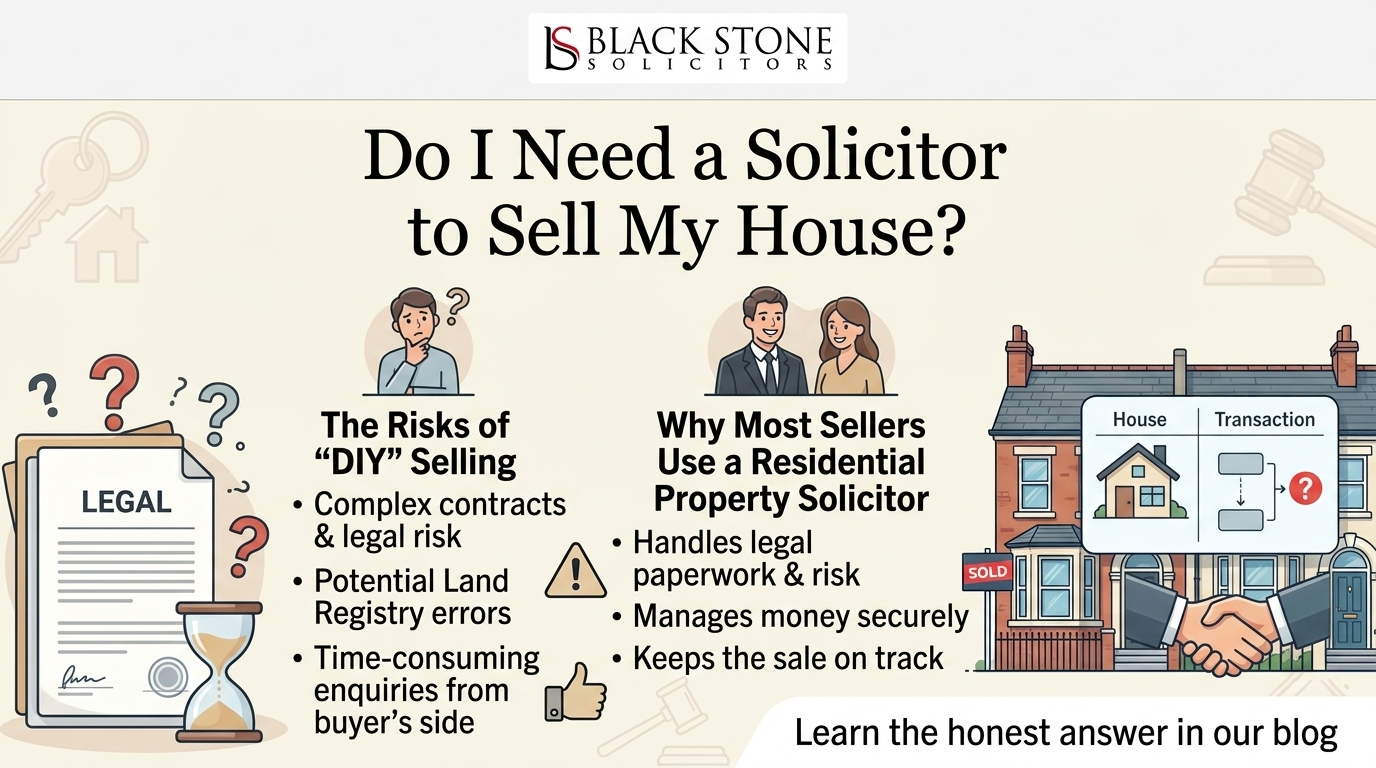
Do I Need a Solicitor to Sell My House?

18 August 2026
Legally, no, you don’t have to use a solicitor to sell a house in the UK. There’s no law stopping you from handling the legal side yourself. Practically speaking though, almost everyone does use one, because the process involves contracts, land registry work, and legal checks that are genuinely risky to get wrong.
If you’re weighing this up, you’re probably trying to save money, or wondering whether the whole thing is more straightforward than solicitors make it sound. Fair question. Let’s actually go through it properly, rather than just saying “get a solicitor” and moving on.
Key Takeaways
You’re not legally required to use a solicitor to sell your house, but the vast majority of sellers do.
The work involved, contracts, title checks, dealing with the buyer’s solicitor, is legally binding and mistakes can be costly.
Residential property solicitors handle the risk and admin so you don’t end up personally liable for errors in the paperwork.
Fixed fee conveyancing means you know the cost upfront, which makes comparing “DIY versus solicitor” a lot more honest.
Selling without one is technically possible but rarely worth the savings once you factor in time, stress and risk.
What Does Selling a House Actually Involve, Legally?
Once you accept an offer, the sale isn’t done. There’s a whole legal process that has to happen before ownership transfers, and it’s called conveyancing.
This includes drafting and reviewing the contract, answering the buyer’s enquiries, handling the property’s title at the Land Registry, and managing the exchange and completion process. It’s detailed, and a fair bit of it carries legal consequences if it’s wrong.
That’s the part people underestimate. Selling a house isn’t just agreeing a price and shaking hands.
Can You Legally Sell a House Without a Solicitor?
Yes, technically. There’s no requirement under UK law that says a solicitor has to be involved. Some sellers do go it alone, particularly on very simple, low value, no chain sales.
But “legally allowed” and “sensible” aren’t the same thing. Most people who attempt it discover fairly quickly that the paperwork is more involved than expected, and mistakes in a legal contract aren’t the kind of thing you want to be learning on the job.
What Happens If You Sell Without a Solicitor?
You’d be responsible for drafting the contract, responding to the buyer’s solicitor’s enquiries, sorting out the title transfer at the Land Registry, and managing the money side of completion. All without legal training.
Buyers’ solicitors also tend to raise far more questions when they’re dealing with an unrepresented seller, simply because there’s more risk on their end too. That can actually slow the sale down rather than speed it up, which defeats half the point of skipping a solicitor in the first place.
Why Most Sellers Use Residential Property Solicitors
There’s a reason this isn’t really a debated topic among people who’ve been through it before.
They Handle the Legal Risk
If something’s wrong in the contract, missing information, an incorrect boundary, an unresolved covenant, that can come back to bite you months or years later. Residential property solicitors are trained to spot these issues before they become your problem.
They Deal With the Other Side
The buyer’s solicitor will send a long list of enquiries. Some genuinely need proper legal answers, and getting them wrong, or missing something, can delay or even derail the whole transaction.
They Manage the Money
Completion involves large sums moving between accounts, and there are strict rules around how that has to happen securely. This isn’t really something to handle informally between two individuals.
They Keep Things on Track
A decent solicitor chases the other side, flags delays early, and generally keeps the transaction moving. When you’re selling without one, that job falls entirely on you, alongside everything else involved in moving house.
How Much Does It Cost to Use a Solicitor?
Legal fees for selling typically range from around 700 to 1200 pounds, depending on the property and how straightforward the sale is. On top of that, there are usually smaller disbursements like ID checks and bank transfer fees.
Many firms now offer fixed fee conveyancing, meaning that price is agreed before any work starts. That’s worth asking about directly, since it removes the worry of an hourly bill creeping up if the sale turns out to be more complicated than expected.
Is Selling Without a Solicitor Actually Cheaper?
On paper, maybe. You’d save the legal fee. In practice, a lot of that saving disappears once you factor in the time spent handling enquiries, the risk of getting something wrong, and the very real chance that an unrepresented sale takes longer to complete because the buyer’s side is being extra cautious.
There’s also the question of what happens if something goes wrong after completion. Get it wrong on your own, and there’s no one to catch the mistake before it becomes a legal problem.
When Might DIY Selling Actually Make Sense?
There are a small number of situations where it’s at least worth considering.
Selling to a close family member with no mortgage involved and full trust on both sides.
An extremely low value property where legal fees feel disproportionate to the sale price.
A cash buyer, no chain, straightforward freehold sale with no complications at all.
Even then, most experienced sellers still bring in a solicitor for the actual contract and Land Registry work, just to be safe.
What Should You Look for in a Solicitor?
If you’ve decided a solicitor is the right call, and for most people it is, a few things are worth checking.
Ask whether they offer fixed fee conveyancing, so you know the total cost from the outset.
Check how many sales they handle regularly, since experienced residential property solicitors tend to move faster and catch issues earlier.
Ask how they communicate. Slow responses from your own solicitor can be just as frustrating as delays from the other side.
Read reviews, particularly ones that mention how the firm handled anything unexpected, since that’s usually where the real differences show up.
Conclusion
You’re not legally obligated to use a solicitor to sell your house, but almost everyone does, and for good reason. The legal work involved, contracts, enquiries, Land Registry transfers, carries real risk if it’s done incorrectly, and that risk sits entirely with you if you skip professional help.
Residential property solicitors exist to manage that risk, deal with the other side’s questions, and keep the transaction moving toward completion. And with fixed fee conveyancing now widely available, the cost is no longer the unpredictable variable it used to be.
If you’re on the fence, get a couple of fixed fee quotes before deciding. Once you see the actual number next to the actual workload involved, the decision tends to make itself.
Frequently Asked Questions
Do I legally need a solicitor to sell my house in the UK?
No, there’s no legal requirement to use one. Most sellers still choose to, because the legal and paperwork risks involved are significant without professional support.
What could go wrong if I sell my house without a solicitor?
You risk contract errors, unresolved title issues, or delays caused by the buyer’s solicitor raising extra questions. Mistakes at this stage can cause serious problems after completion.
How much do residential property solicitors charge to sell a house?
Fees typically range from about 700 to 1200 pounds, depending on the property and complexity. Many firms now offer fixed fee conveyancing so the total is agreed upfront.
Is it cheaper to sell a house without a solicitor?
It can save the legal fee upfront, but added time, risk and potential delays often reduce or cancel out those savings. Most sellers find professional help worth the cost.
When is it reasonable to sell a house without a solicitor?
It may work for very simple sales, such as low value properties or family transactions with full trust. Even then, many people still use a solicitor for the legal paperwork.