
How Long Does Conveyancing Take? A Step-by-Step Timeline

18 August 2026
Most people asking this question already have a moving date in mind, or at least a hope for one. In reality, conveyancing on a standard UK property takes somewhere between eight and twelve weeks, start to finish. Auction purchases move much faster, sometimes wrapping up in under a month, because the legal groundwork happens before the sale even takes place.
There’s no single answer that applies to every transaction, and anyone who tells you otherwise probably hasn’t handled many house sales. What we can do is walk through what typically happens at each stage, so you know roughly where you stand and what might be holding things up.
Key Takeaways
A few things worth remembering before we dig into the detail.
Eight to twelve weeks is the rough average for a standard purchase or sale, though it’s genuinely just an average.
Fixed fee conveyancing won’t necessarily get you moved in any quicker, but it does stop the bill from creeping up while you wait.
Auction property purchases have a hard legal deadline, usually 20 working days, so fast conveyancing for auction property is really its own category of service.
Chains cause more delays than almost anything else. Mortgage lenders and local council search times are close behind.
An experienced conveyancer who actually answers the phone matters more than people realise.
What Does Conveyancing Actually Involve?
Conveyancing is the legal work behind transferring a property from seller to buyer. It’s handled by a solicitor or licensed conveyancer, and it covers contract review, property searches, liaising with mortgage lenders, and eventually the exchange and completion of the sale.
Put simply, it’s the paperwork and legal checking that has to happen before anyone can legally hand over the keys.
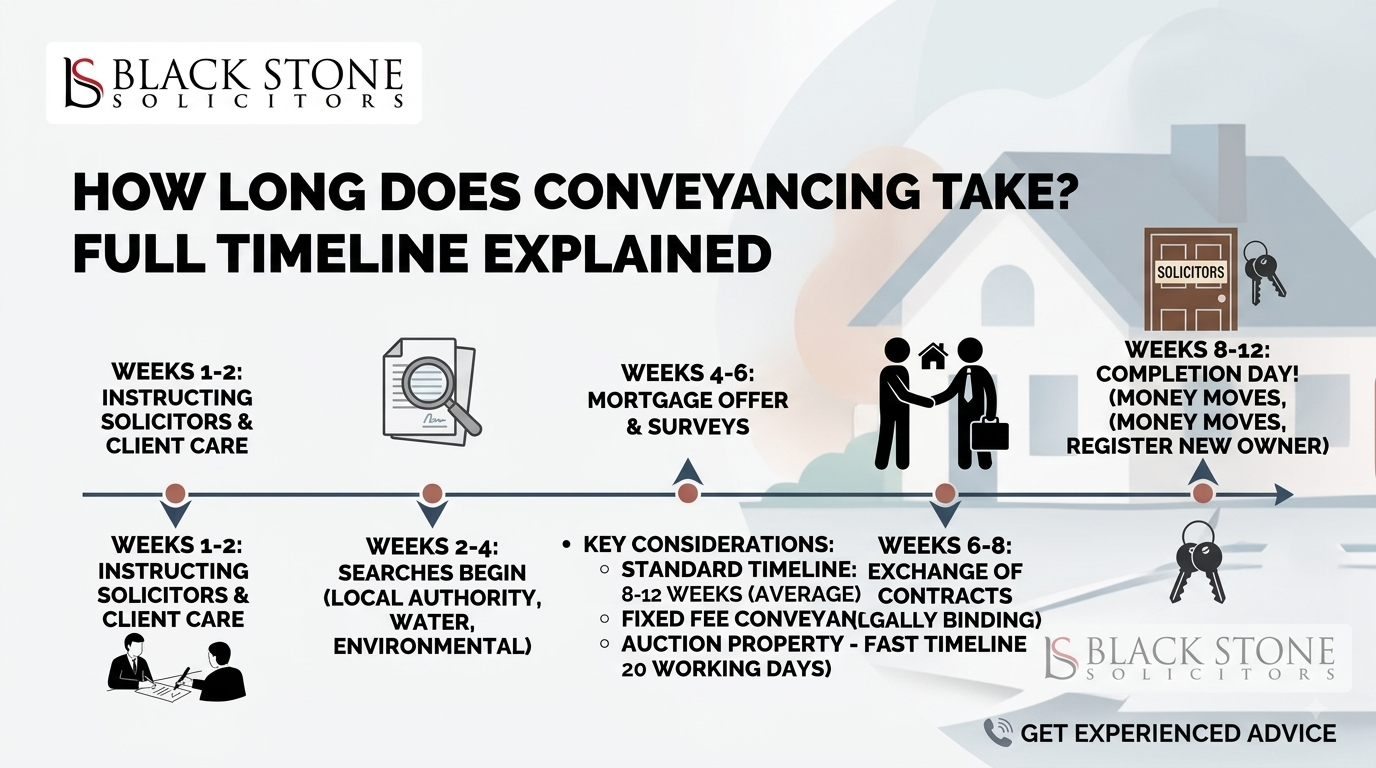
A Rough Week by Week Timeline
Every transaction has its own quirks, but there’s a pattern most sales follow closely enough to be useful.
The First Couple of Weeks: Getting Started
This is when you officially instruct your solicitor. They’ll run identity checks, send you a client care pack (which, let’s be honest, most people skim rather than read properly), and if you’re selling, start pulling together the contract pack.
A lot of firms offer fixed fee conveyancing right from this point, so you’re told upfront what the whole thing will cost rather than watching the meter run.
Weeks Two to Four: Searches Begin
Your solicitor orders local authority searches, along with water, drainage and environmental checks. These flag things like flood risk, planning history nearby, or anything unusual buried in council records.
This is genuinely the stage where people start getting impatient, and it’s not really anyone’s fault. Local councils differ wildly in how fast they turn searches around. In some areas it’s a week. In others, it drags on for a month.
Weeks Four to Six: Mortgage Offer and Survey
If a mortgage is involved, the lender needs to value the property and issue a formal offer. Your solicitor checks the offer against what was originally agreed, which sounds simple but occasionally throws up surprises.
Meanwhile, enquiries raised by the buyer’s solicitor get answered by the seller’s side. How quickly this happens depends almost entirely on how thorough the original paperwork was.
Weeks Six to Eight: Exchange of Contracts
Both sides sign matching contracts, a deposit gets paid (typically 10 percent), and at that point the sale becomes legally binding. Walking away after this stage means losing money, so it’s the moment most buyers finally exhale.
Weeks Eight to Twelve: Completion Day
Completion is when the money moves, the property gets registered under the new owner’s name, and keys are handed over. A week or two after exchange is common, though same day exchange and completion does happen occasionally, usually in simpler chain free deals.
Why Do Some Conveyancing Transactions Take Longer?
There’s usually a specific reason, and it’s rarely mysterious once you look closely.
Chains are the classic culprit. Buy and sell at the same time, and you’re only as fast as the slowest link.
Mortgage lenders sometimes ask for extra documents, or the valuation comes back lower than expected, which can send things back to the drawing board.
Slow solicitors, missing documents, or unresolved leasehold questions all add days, sometimes weeks.
And then there’s the local authority search delay, which nobody involved in your transaction actually controls. In busier councils this alone can take three or four weeks.
Does Fixed Fee Conveyancing Speed Anything Up?
Not really, if we’re being honest. What it does is take cost anxiety off the table.
You agree the fee before anything starts, so there’s no creeping hourly bill and no nasty surprise invoice halfway through. A lot of clients also find that solicitors working on fixed fee terms tend to be more structured about deadlines, simply because the arrangement is built around clear stages rather than open ended billing.
If knowing your total cost matters as much as knowing your moving date, this is worth asking about before you instruct anyone.
Fast Conveyancing for Auction Property
Buying at auction plays by completely different rules. The second the hammer falls, you’re legally committed, and most auction houses require completion within 20 working days. Some push for even less.
That’s why fast conveyancing for auction property exists as its own specialism. A good conveyancer reviews the legal pack before the auction happens, not after, so nothing unexpected turns up in the title once you’ve already won the bid.
Because there’s no chain and no drawn out offer negotiations, auction sales can genuinely complete in two to four weeks, but only if your solicitor already knows what they’re dealing with before the gavel comes down.
If you’re planning to bid, get your conveyancer looking at the legal pack days before the auction, not the morning after.
Practical Ways to Speed Things Up
A handful of small decisions can shave real time off the process.
Instruct your solicitor before you’ve even had an offer accepted, if you can.
Have identification and proof of funds sorted in advance rather than scrambling when asked.
Reply to enquiries the same day where possible instead of letting them sit in an inbox.
Pick a conveyancer who regularly handles your type of transaction, whether that’s a standard sale, an auction purchase, or something leasehold.
Ask about fixed fee conveyancing upfront so cost isn’t something you’re negotiating mid process.
Why Experience Actually Makes a Difference
Property law has more sharp edges than people expect. Restrictive covenants buried in decades old title deeds, boundary disputes nobody mentioned, lease terms that read fine until you look twice. An experienced solicitor tends to catch these early, rather than three days before exchange when everyone’s already packed.
Firms that handle a high volume of residential, auction and commercial work also tend to have better working relationships with local councils and search providers, which quietly shaves time off searches more often than people realise.
Final Thoughts
There’s no universal timeline for conveyancing, but knowing the general shape of the process helps you plan properly instead of guessing. Eight to twelve weeks covers most standard purchases and sales, with the exact figure shaped by chains, mortgage approval, and how quickly people respond to each other.
If cost certainty matters to you, ask about fixed fee conveyancing on your very first call with a solicitor. And if you’re heading to auction, fast conveyancing for auction property isn’t optional, it’s essential given how tight those legal deadlines are.
Whichever route you’re on, working with a conveyancer who’s experienced, responsive, and upfront about both cost and timing tends to make the whole thing considerably less stressful.
Frequently Asked Questions
How long does conveyancing usually take?
Most standard purchases or sales take between 8 and 12 weeks from instruction to completion. Chain length, mortgage speed and local search delays all affect the final timeline.
Does fixed fee conveyancing speed up the process?
Not directly, but it removes cost uncertainty and often comes with clearer milestones along the way. This tends to make the process feel smoother even if the actual timeline stays similar.
How fast can auction property conveyancing be completed?
Auction purchases typically complete within 20 working days of the sale, sometimes sooner. Fast conveyancing for auction property depends on the legal pack being reviewed before bidding starts.
What usually causes conveyancing delays?
Chains, slow mortgage offers and local authority search delays are the biggest culprits. Missing paperwork or slow responses between solicitors can add unnecessary time too.
Is it possible to complete conveyancing in under a week?
It happens occasionally, mostly with cash buyers, no chain, and searches already available. Auction sales are the most common scenario where such a short timeline is realistic.