
Why Does Conveyancing Take So Long?

8 July 2026
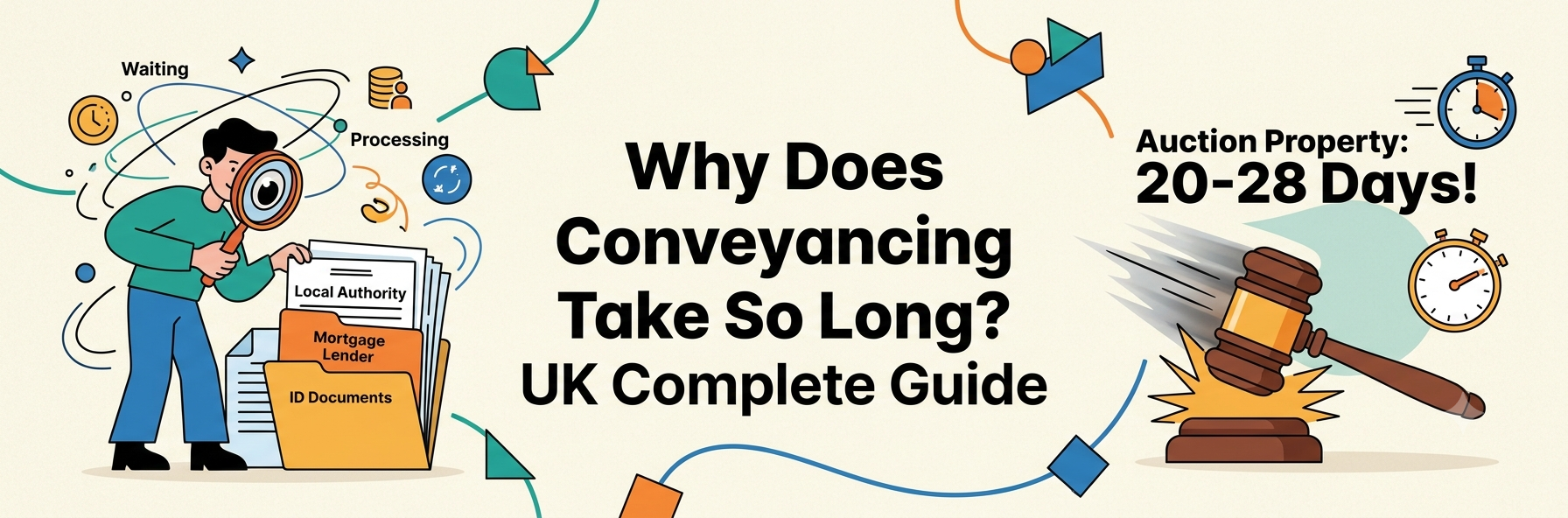
If you’re mid way through buying a house right now, you’ve probably already asked this question out loud, to your partner, your agent, maybe even the cat. Conveyancing feels slow because it genuinely is a lot of moving parts working at once. Solicitors, lenders, local councils, and sometimes three or four other people in a chain all have to get their bit done before anyone can move house. A normal purchase in the UK takes somewhere between 8 and 12 weeks, and that’s when things go smoothly. If you’re buying at auction though, you don’t get that luxury. You’re looking at 20 to 28 days, full stop, which is exactly why fast conveyancing for auction property isn’t just a nice to have. It’s the whole game.
This isn’t going to be one of those articles that just tells you “delays happen, be patient.” I want to actually walk you through what’s going on behind the scenes, why it takes as long as it does, and what you can genuinely do about it if you’re on a deadline.
The Short Version, If You’re Short on Time
Most standard purchases take 8 to 12 weeks. Auction purchases don’t get that grace period, you’re usually looking at completing within a month or you risk losing your deposit.
The biggest hold ups are almost always local authority searches, mortgage lenders taking their time, and chains where one person’s delay becomes everyone’s problem.
Fast conveyancing for auction property only works if you start before the auction, not after you’ve already won the bid.
A good chunk of delay is just paperwork sitting unsigned in someone’s inbox. Sounds silly, but it happens constantly.
If your solicitor has an auction background, they’ll already know how to move at the pace you need. Not every firm does.
So What Actually Is Conveyancing?
At its core, conveyancing is just the legal handover of a property from one owner to another. Simple in theory. In practice, your solicitor is checking that the property is actually legally sound, that there’s nothing hidden in the title, and that when money changes hands, it does so properly and safely.
They’ll be pulling title deeds, ordering searches from the council, checking for anything odd like planning restrictions, and lining up the mortgage paperwork with your lender. None of that happens instantly, because none of it is really in your solicitor’s control. They’re often just waiting on someone else to reply. That’s usually the bit people don’t realise, your solicitor isn’t sitting on their hands, they’re stuck behind a council or a bank that moves at its own pace.
Why Does It Take So Long, Really?
You’re Probably in a Chain
If your seller is also buying somewhere else, and their seller is buying somewhere else too, you’ve got a chain. Everyone has to be ready to exchange at the same time. One nervous buyer three houses down the chain, and suddenly your completion date slips as well.
Searches Take Forever With Some Councils
Local searches tell your solicitor things like flood risk, planning history, and whether there’s a road scheme about to appear next door. Some councils turn these around in days. Others, honestly, can take weeks. It depends entirely on which local authority you’re dealing with, and there’s not much anyone can do to rush it.
Your Lender Is Doing Its Own Checks
Before your mortgage offer lands, the lender has to value the property and go through your finances properly. Two to four weeks is fairly normal for this. If there’s anything odd with affordability or the valuation comes back lower than expected, add more time on top.
Someone Forgot to Sign Something
I promise you this happens more than people think. A missing ID document, an unsigned form, a questionnaire that’s half filled in. Small things, but they hold up the entire chain while your solicitor chases it down, again.
Nobody’s Talking to Each Other Fast Enough
Estate agents, brokers, solicitors, sometimes surveyors too, they’re all involved, and if one of them is slow to reply, everything downstream slows with it.
Auction Property Is a Completely Different Beast
Here’s the thing about auctions. The moment the hammer goes down, you’re legally committed. Contracts exchange there and then. You don’t get weeks to think it over or sort your finances out afterward, you’ve usually got 20 to 28 days to complete, and that clock doesn’t stop for anyone.
This is exactly why fast conveyancing for auction property has to be planned for, not reacted to. Miss that deadline and you’re not just annoyed, you could lose your deposit entirely, get chased legally by the seller, or find yourself blacklisted from future auctions with that house.
What Actually Makes It Faster
The real trick with auction conveyancing isn’t finding a “fast” solicitor after you’ve won the bid. It’s having someone review the legal pack before the auction even starts. A solicitor who knows what they’re doing will flag any title issues, lease problems, or restrictions in advance, so by the time you’re bidding, you already know what you’re getting into.
Turning up to a solicitor the day after you’ve won at auction and asking them to work miracles isn’t really fast conveyancing, it’s just panic. The smart buyers have their solicitor lined up weeks before they even step into the auction room.
How Long Does It Actually Take, With Real Numbers
Going by HM Land Registry data and what most UK conveyancing solicitors will tell you, a straightforward purchase with no chain sits around 8 weeks. Add a chain and you’re looking at 12 to 16 weeks fairly often. Auctions are the outlier, contractually you’re bound to complete within whatever window is set, usually 20 to 28 days, no exceptions.
Leasehold flats tend to take longer too, because there’s an extra layer of checks with management companies and freeholders that houses simply don’t have.
What Can You Actually Do About It?
Get a solicitor lined up early. Don’t wait until your offer’s accepted, especially with auctions, get someone in place before you even bid.
Have your documents ready before anyone asks. ID, proof of address, proof of funds, mortgage agreement in principle, all sorted in advance saves you days later.
Pick someone who’s actually done auction work before. Not every conveyancer is used to moving at that speed, and fast conveyancing for auction property genuinely requires a firm that’s comfortable with tight deadlines.
Reply quickly when your solicitor needs something. It sounds obvious, but a two day delay in getting back to an email can genuinely push your completion date back further than you’d think.
Ask for weekly updates. It keeps you in the loop and means you can act the second something needs your attention instead of finding out too late.
A Few Warning Signs Worth Knowing
If your solicitor’s gone quiet for over a week, it’s worth just checking in. Searches taking longer than four weeks isn’t unusual with certain councils, so don’t panic straight away, but do flag it. If your mortgage offer hasn’t shown up within three weeks of applying, give your broker a nudge. And if you’re in a long chain, just know some of this genuinely isn’t in your solicitor’s control, it’s the person four houses down who’s dragging their feet.
Wrapping It Up
Conveyancing isn’t slow because someone’s being lazy. It’s slow because it’s a chain of dependencies, your solicitor waiting on a council, waiting on a lender, waiting on someone else’s buyer to sort their mortgage out. Most of the delay comes down to searches, lender processing, chains, and honestly, just paperwork sitting unsigned somewhere.
For a normal house purchase, patience and staying on top of your solicitor goes a long way. But if you’re buying at auction, patience isn’t really an option you have. The deadline is fixed the moment the hammer falls, which is exactly why fast conveyancing for auction property needs to start before you bid, not scramble into action after.
The honest truth is most delays are avoidable. Get organised early, pick a solicitor who actually knows what they’re doing, and stay responsive when they need something from you. Do that, and whether you’re buying the normal way or racing an auction deadline, things move about as fast as they realistically can.
Frequently Asked Questions
How long does conveyancing usually take for a house purchase?
Around 8 weeks if there’s no chain involved. Add a chain into the mix and you’re more realistically looking at 12 to 16 weeks.
Why does conveyancing take longer for auction properties?
It’s actually the opposite, auctions force things to move faster, not slower. You’ve got 20 to 28 days to complete, which is why fast conveyancing for auction property needs sorting before you bid.
Can I actually speed up my own conveyancing?
Yes, more than people think. Getting a solicitor early, having your documents ready, and replying quickly when asked for something can shave real time off the process.
What’s the single biggest cause of delay?
Local authority searches and lender processing times, hands down. Missing paperwork from either side is a close third.
What happens if I miss the completion deadline on an auction property?
You risk losing your deposit outright, possible legal action from the seller, and being barred from future auctions with that house. It’s why fast conveyancing for auction property really isn’t optional.