
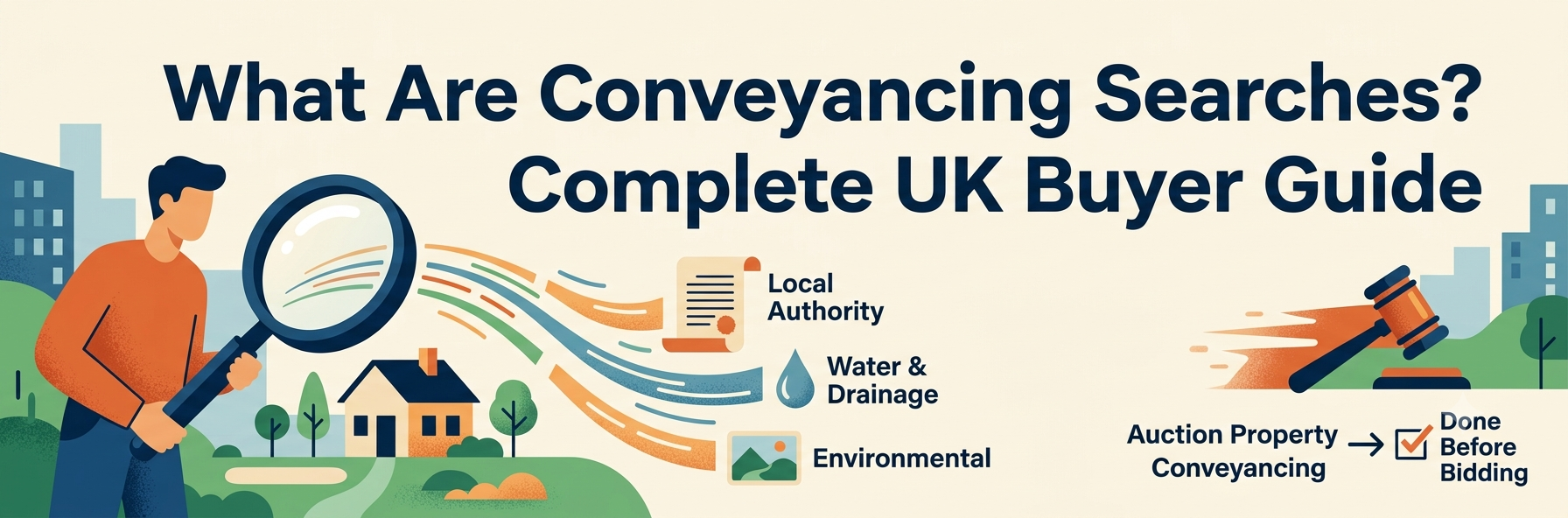
What Are Conveyancing Searches and Why Are They Important

8 July 2026
If you’re buying a property, conveyancing searches are the checks your solicitor runs to find out what’s really going on with that piece of land before you commit your money to it. They dig up things like flood risk, planning issues, old debts attached to the property, and environmental red flags that you’d never spot just by walking through the house.
Skip them, and you might end up owning something that comes with a nasty surprise attached, sometimes years later. This matters even more if you’re going down the auction property conveyancing route, where you often don’t get the luxury of time to sort problems out before you’re legally on the hook.
Most people spend weeks obsessing over kitchen finishes and whether the garden gets afternoon sun. Fair enough, that stuff matters too. But the boring paperwork underneath the sale is often what decides whether you’ve made a smart purchase or a costly mistake.
Key Takeaways
Conveyancing searches uncover legal, financial, and environmental problems tied to a property before you buy it.
The main ones are local authority, environmental, water and drainage, and land registry searches.
Skip them and you risk hidden costs, legal headaches, or a property that’s hard to sell later.
Auction property conveyancing usually means doing these searches faster, since auction contracts bind you almost the moment the sale ends.
Always let a qualified solicitor or conveyancer handle this side of things. It’s not a DIY job.
What Is Conveyancing, Really?
Conveyancing is just the legal name for transferring ownership of a property from one person to another. It starts once an offer’s accepted and runs right through to completion day, when you finally get the keys.
Your conveyancer does the heavy lifting here. They handle contracts, talk to the other side’s solicitor, move the money across, and register you as the new owner with the Land Registry. Searches are one piece of that puzzle, but honestly, they’re the piece that protects you the most.
So What Exactly Are Conveyancing Searches?
They’re formal requests sent out to councils, government agencies, and specialist providers to pull together facts about a property and the ground it sits on.
You can think of it a bit like running a background check, except instead of checking a person, you’re checking a house. Searches tell you things you’d never notice on a viewing. Is it on a flood plain? Are there planning applications nearby that could affect the value? Does the council have any financial claim sitting against the property?
Why Should Buyers Bother With Them?
Because a property can look absolutely perfect and still be dragging around legal baggage you can’t see. Boundary disputes, undeclared rights of way, contamination from something that used to sit on the land decades ago, none of that shows up on a viewing.
Lenders care too. Most won’t release mortgage funds until the searches come back clean, because they’ve got their own money riding on the property being what it appears to be.
The Main Types of Conveyancing Searches
Most conveyancers run a standard set of searches unless there’s a specific reason not to.
Local Authority Search
This one goes to the council and asks about planning permissions, building regulation sign offs, road schemes in the area, and whether the property sits in a conservation zone. It also flags anything like enforcement notices or unpaid charges linked to the land.
Environmental Search
This checks for contaminated land, flood risk, subsidence, and nearby landfill sites. Worth knowing that the Environment Agency puts over five million properties in England at risk of flooding from rivers, seas, or surface water. That’s not a small number, and it’s exactly why this search isn’t something to skip.
Water and Drainage Search
Confirms whether the property connects to public water and sewage systems, and shows where drains and pipes actually run. Handy to know if you’re planning an extension down the line.
Land Registry Search
Confirms who actually owns the property, checks the title matches up, and reveals any mortgages, charges, or restrictions already sitting against it.
Chancel Repair Liability Search
A strange but genuine one. Older properties near historic churches can, in rare cases, carry liability toward church repair costs. Less common these days, but still worth checking if the property’s old enough.
Why Do These Searches Actually Matter?
Because they catch problems while you still have options. Say a search shows the council’s approved a road extension right behind what would be your garden, or the land used to host an industrial waste site. Better to find that out now, while you can still negotiate, ask for repairs, or simply walk away.
There’s also the resale angle people forget about. Skip searches now, and whoever buys from you later will run their own, uncovering the same issues, except now it’s your sale that gets delayed or falls apart.
How Does This Work Differently for Auction Properties?
Auction property conveyancing plays by different rules, and honestly, this is where things get a bit riskier.
Buy at auction and you’re bound the second the hammer drops, or the moment an online auction closes. No cooling off period. No few days to think it over. Which means, ideally, your searches need to be done before you even raise your paddle, not after.
Why Is It Such A Different Process?
Because the negotiation window everyone’s used to just isn’t there. Normally, searches happen after your offer’s accepted, and you’ve got weeks to review results and flag concerns. Auctions cut that safety net out entirely.
You’re committed the moment the auction ends, and completion is often required within 20 working days. That’s tight. It means anyone serious about auction property conveyancing needs to get searches sorted and reviewed using the legal pack well before bidding starts, not after they’ve already won.
What To Check Before You Bid
Get the legal pack from the auctioneer and hand it to your conveyancer straight away. Some searches might already be included in that pack, but not always all of them, so double check exactly what’s covered.
A conveyancer who’s done plenty of auction work will spot missing searches fast, along with odd contract clauses or restrictive covenants that could limit what you’re allowed to do with the property afterward.
One practical bit of advice: build search and legal costs into your auction budget from the start. Don’t treat it as an afterthought once you’ve already won the bid, because by then it’s too late to back out easily.
How Long Do These Searches Take?
Usually somewhere between one and three weeks, though it really depends on how quickly the local authority processes requests. Some councils are quick, others aren’t, and delays happen more than you’d like during busy periods.
Which brings us back to auctions. If you wait until after the sale to start searches, you’ve already missed your window, because you’re contractually committed the moment bidding closes.
What If A Search Turns Up A Problem?
Your conveyancer will walk you through what it means and what you can do about it. In a normal purchase, you might renegotiate the price, ask the seller to fix things, get indemnity insurance, or pull out of the deal altogether.
At auction, your choices shrink considerably, because you’re already bound by contract. That’s the real reason thorough searches before bidding matter so much when it comes to auction property conveyancing.
Final Thoughts
Conveyancing searches aren’t just red tape. They’re one of the best tools you have to avoid financial and legal trouble down the line.
Whether you’re going through a standard purchase or the faster pace of buying at auction, taking searches seriously can save you years of stress and money you didn’t plan on spending. A decent conveyancer will walk you through each search, explain what it actually means in plain language, and help you decide with your eyes open.
Property is likely one of the biggest purchases you’ll ever make. Spending a bit more time and money getting the searches right is a small price for genuine peace of mind.
Frequently Asked Questions
What are conveyancing searches used for?
They confirm the legal, financial, and environmental facts about a property before you buy it. This protects you from hidden risks like flood exposure, planning problems, or unpaid charges linked to the land.
How much do conveyancing searches cost?
Costs vary depending on location and which searches you need, but expect somewhere around 250 to 450 pounds in total. Your conveyancer can give you an exact figure once they know the property.
Can I buy at auction without doing searches first?
Technically yes, but it’s a gamble since auction contracts are binding immediately. It’s far safer to get searches done before you bid, so you’re not caught out after winning.
Who actually carries out conveyancing searches?
A solicitor or licensed conveyancer handles this for you. They order the searches, make sense of the results, and flag anything you need to worry about.
Is auction property conveyancing pricier than a standard purchase?
Sometimes, mostly because of the tighter deadlines and faster turnaround needed. The exact cost still comes down to the conveyancer and how complicated the property itself is.